Rest, Relax, Recharge! by Marisa Adriana Kallman, MA, LMHC, CP
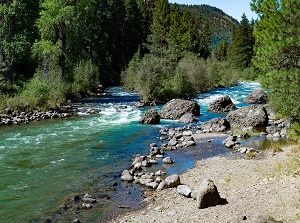
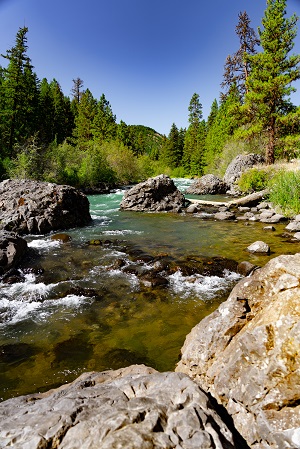
I often try to help clients find more balance in their lives. We discuss setting aside time to relax and recharge their batteries. It can be challenging for even the most organized person to manage the chaos of modern life: work, home, and family. Countless technological creations that were supposed to make life easier such as email, voice messages and text messaging may become overwhelming. Add daily errands and navigating through traffic to the mix and it's a wonder that we don't all feel like pulling out our hair - or someone else's! Mt. Rainier is one of the many beautiful places to go in our state. I've been there often and usually set out on a Friday afternoon. The long drive gets me away from the throes of city life and into the fresh mountain air. On my last trip, I remember being just outside of Seattle, hitting the rush-hour traffic and inched forward for the next two hours. I finally made it over the mountain, continued east, and arrived at a campsite five hours later. There I ate dinner, cleaned up and quickly set up camp before I started nodding off at the picnic table. After a brief glance at the star-filled sky, I settled in for the night. I spent most of the next day sleeping and reading in the tent, occasionally looking up at a blue sky peeking through the trees. I finished the latest Harry Potter book while listening to the roaring creek outside the tent and the songbirds singing. Moments of peace rested gently upon my soul. I questioned what it was I was experiencing that day: was it exhaustion or relaxation? I came to understand once I allowed myself the chance to relax and rest, exhaustion showed up. The thought of doing anything physical like going for a walk or cooking a meal left me feeling drained and unable to move. However, after enough hours of rest and relaxation, I felt peaceful and eventually energy and motivation returned. I wondered whether I could find more ways to relax and rest on a regular basis. Then perhaps I could eliminate exhaustion and enjoy more rejuvenating peace and quiet. It became quite clear to me; rest to recharge. What a concept! What is the definition of rest or relaxation? I came up with some examples. Add some of your own to the following list: - Get 8 hours a sleep a night.
- Take a short nap sometime during the day.
- Sit down on the couch for a break after doing housework.
- Read the newspaper with a cup of coffee in the morning.
- Take a vacation.
I wonder, though, how often do we get 8 hours of sleep, take a break during the day with a nap, or take a vacation. And can we take time to relax and rest without guilt? I hear people say, "I don't have time to take a break, a nap, a vacation, or get a full night's sleep.” Or, "I can't afford to go on a vacation." Or, "Who will do the work if I take a break?" I believe we pay a high price when we neglect our rest or to spend time doing relaxing activities. We become restless (no pun intended!), irritable, driven, numb, physically ill, depressed, anxious. Then everyone in our daily lives, including ourselves, loses out. We live in a society that advocates working more and taking less time off. According to the World Tourism Organization, the United States ranks lowest amongst the industrialized nations with an average of 13 days of vacation per year. Japan ranks next but jumps to 25 days, and Italy is at the top of list with 42 days of vacation per year. So what is the solution? Consider the following: 1. A first step is to define rest and relaxation for yourself. There are different ways to create your definition. You can simply make a list of what you might need to do to get some rest and relax. In a more creative context, try drawing a picture or map, writing a poem or song, etc. Think of some different ways to rest, relax, and expand your creative process. 2. If you get stuck in the process of thinking of your definition of rest and relaxation, ask a friend to help you brainstorm. 3. Plan time for rest and relaxation into your daily schedule. Keep your goals simple and attainable; maybe try to get an extra 15 minutes of sleep in the morning. 4. Plan time off/a vacation for yourself. If you find yourself blocked by difficulties in making vacation plans, i.e. not enough money, not enough time, again ask a friend to help you think of some ways to make a vacation happen. For example, go away for a weekend or a day trip, or go with others and share the good times as well as the expense. 5. Keep in mind that by taking regular breaks and vacations, you help yourself and those around you. Compare the process to sitting next to a child on an airplane in a stressful situation: the oxygen mask goes on you first, then you help the child. If what you're suffering from is the exhaustion of modern life, try to relax, get some rest, and your batteries will re-charge. If you find yourself on vacation somewhere and your body wants to rest, let it. Then you are ready to go sight-seeing! Contact me for more information. |